The driving force behind our research is conservation.
Elephants in Sri Lanka occupy a precarious position. On one hand, they are a beloved cultural icon, and Sri Lanka contains the largest concentration of elephants of any Asian country. On the other hand, decreasing and fragmented habitat combined with high elephant densities leads to human–elephant conflict. Unfortunately, human–elephant conflict is not only detrimental to individual elephants and elephant populations, but it also can be devastating to the physical and economic security of human communities that share landscapes with elephants and other wildlife.
To inform strategies to mitigate human–elephant conflict, our research program comprises two major themes. First, we conduct animal-centered research on elephant demographics, behavior, and physiology to understand how individuals respond to environmental pressures, including changing resource availability, complex social landscapes, and increasing human activity. In appreciating how elephants perceive and manage these challenges, we can better plan conservation interventions. Second our human-centered research seeks to engage community members so that we can better understand the impact of the conflict on human attitudes and perceptions towards elephants and conservation. Our team recognizes that people living around elephants often have been marginalized, and we actively seek opportunities to give them a voice in our work.
Read more below about some of our ongoing research, or click the button to be directed to our research publications.
-
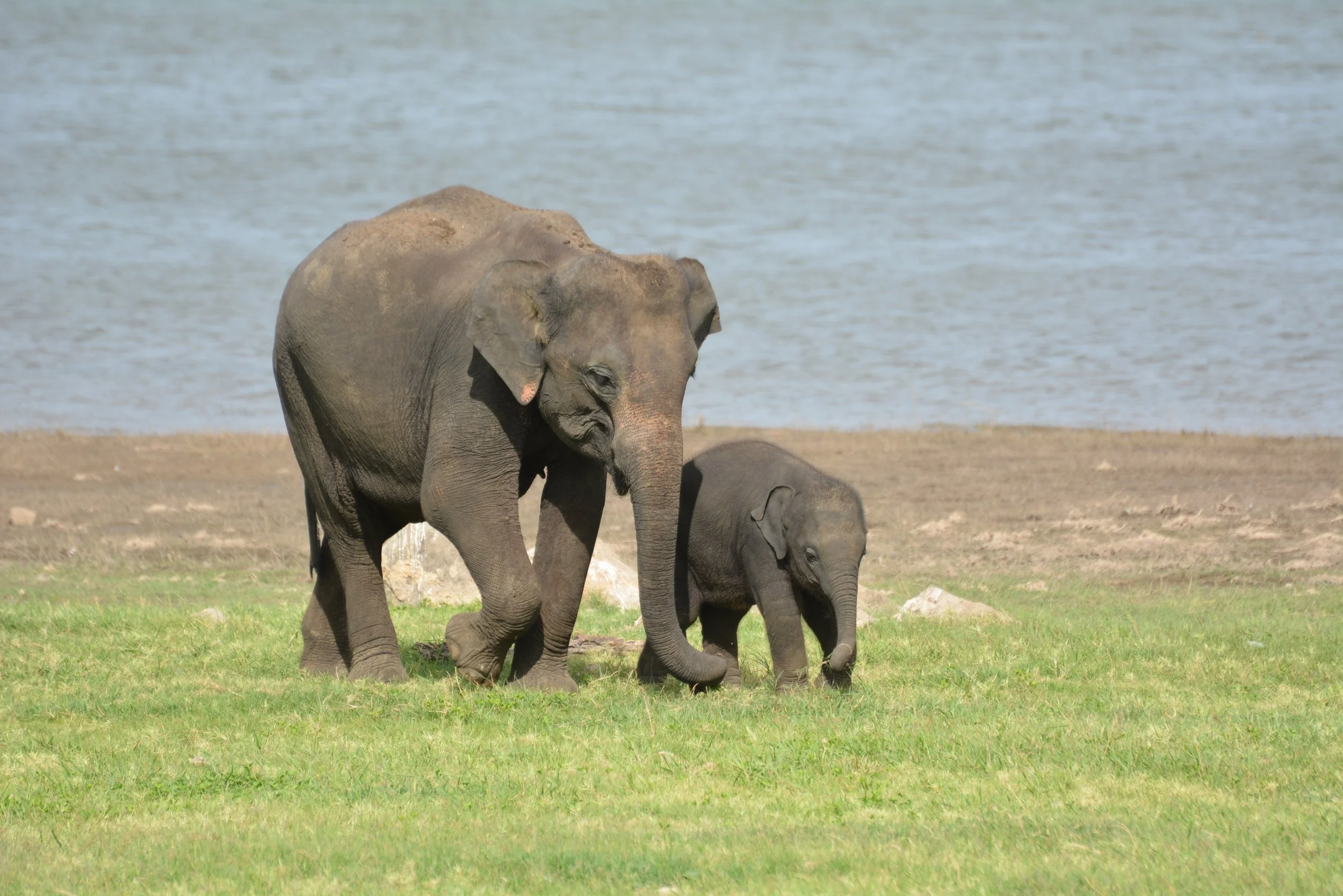
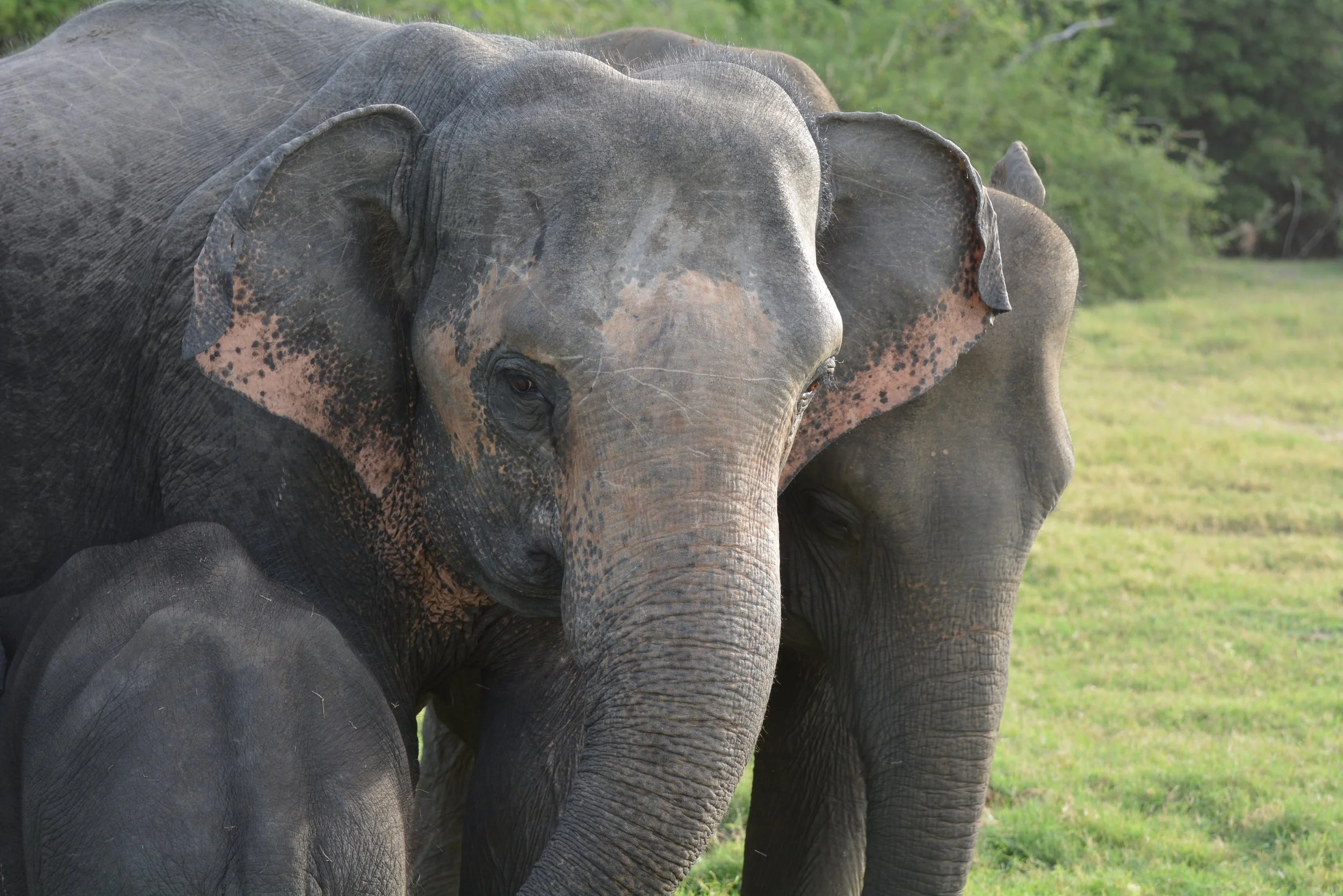
Minneriya and Kaudulla National Parks in central Sri Lanka are the locations of the world-famous annual elephant gathering, whereby hundreds of elephants congregate around the centralized water tanks that the parks contain. However, the driving forces and consequences of this gathering is largely unknown. Not only are the parks a destination for local and international tourists, but they are also surrounded by human activity and agriculture.
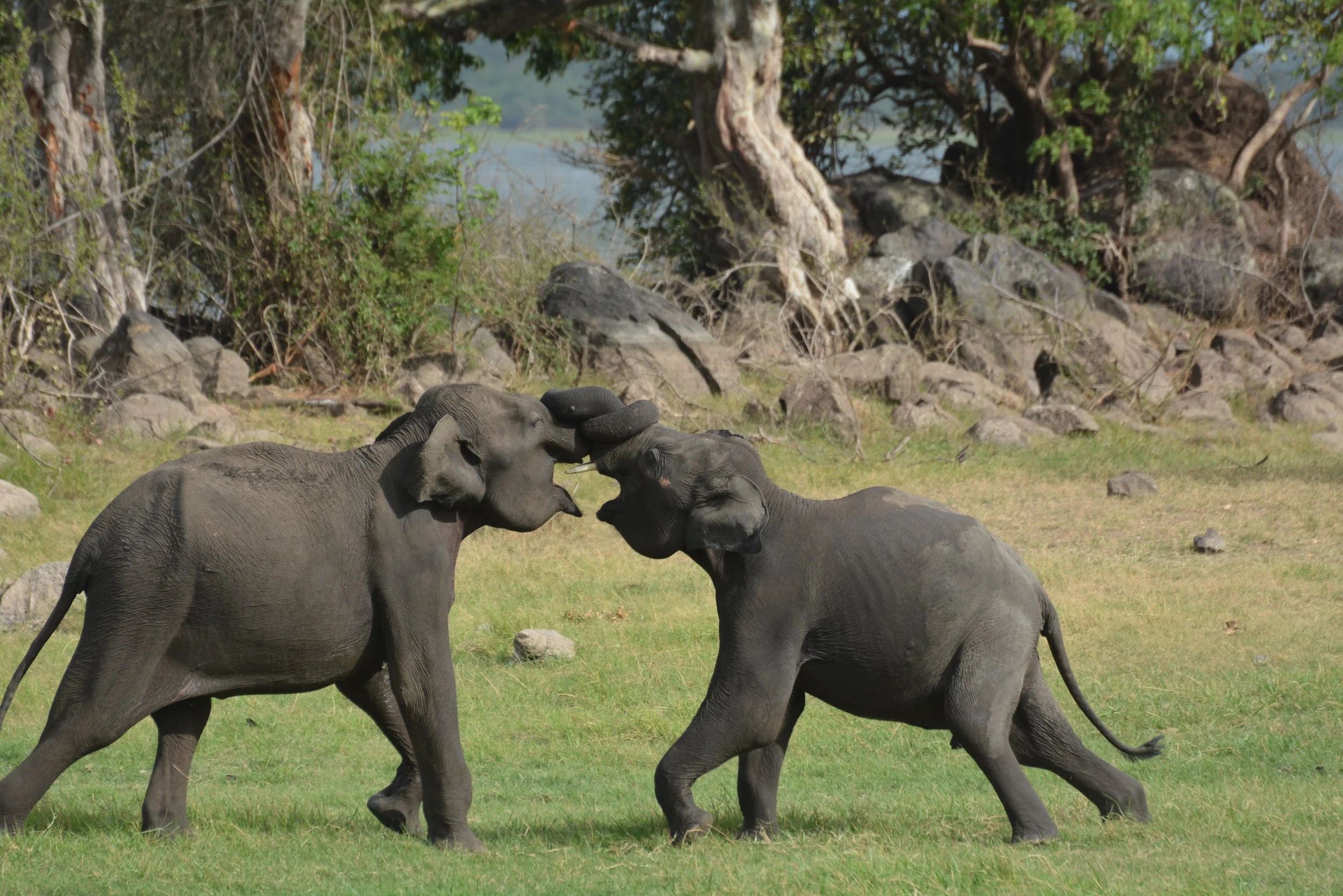
Our team monitors elephants in Minneriya and Kaudulla to better understand the demographics and social behavior of the elephants that participate in the gathering. We hope to better understand why elephants gather in this area (as opposed to other areas on the island). We are particularly interested in male elephants, given the propensity of males to engage in human–elephant conflict through crop-raiding. Male elephants are social opportunists, and they are often observed in variable social groupings, spending time alone, in loosely connected “bachelor groups,” and in consorts with females. We are building a growing database of these males to characterize behavioral and physiological implications of the gathering.
-
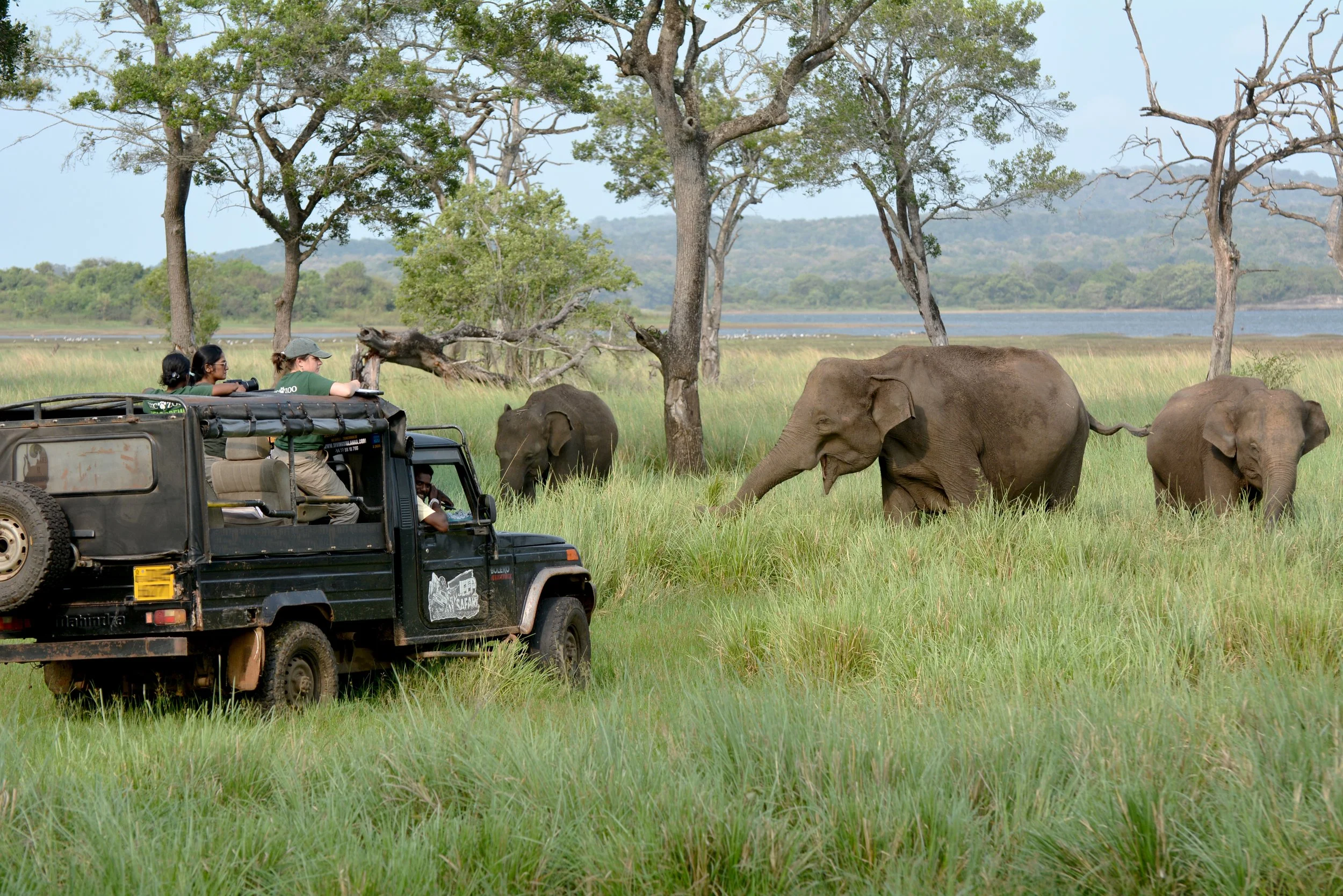
Sri Lanka’s economy depends on a flourishing tourism industry, and visitors from all over the world come to see the largest concentration of elephants anywhere in Asia. At the same time, it is important that this tourism develops sustainably and without compromising the wellbeing of the wildlife, including elephants.
Led by SLEP Graduate Research Assistant Darshika Jayarathna, we are conducting non-invasive research to better understand elephant responses to tourism in Minneriya National Park. We collect behavioral data during park operating hours to characterize the range of reactions that elephants exhibit towards tourist vehicles. Additionally, we collect fecal samples to measure prolonged physiological responses to tourism.
-
Successful conservation strategies require a certain level of tolerance from local communities. Furthermore, tolerance towards wild elephants is influenced by perceptions, which are largely formed through local communities interacting with wild elephants in their environment. Factors such as socioeconomic status, education levels, and demographic factors such as age and sex may also influence perceptions. While it is important to understand elephant ecology in order to develop conservation strategies, it is also important to engage people who live among elephants to make these strategies sustainable. The tolerance of local communities towards wildlife is fundamental to the success conservation efforts. This project seeks to evaluate perceptions of local communities living around Minneriya National Park towards human-elephant conflict and elephant conservation.
-
Wild animal health, survival, and fitness depends on the ability of animals to respond to environmental change over time. As more animals come into contact with human populations, temporal shifts in the environment can also be more directly anthropogenic, including changes in land use over seasons. The gut mirobiome can represent a useful biomarker to flag potential host-environment relationships of interest as they apply to physiological changes.
In collaboration with Dr. Katherine Amato and her lab at Northwestern University (USA), we are researching how the elephant gut microbiome responds to temporal changes in the environment around Minneriya National Park, including climate and tourist activity.
-
The purpose of this project is to build capacity among stakeholders in north central Sri Lanka to translate research findings into community-driven conservation. Across Asia, efforts to directly apply the results of elephant field studies to conservation efforts (e.g., human–elephant conflict mitigation) have been met with limited success. The complex mosaic of landscapes that comprise the range of Asian elephants necessitates location- and population-specific interventions, further challenging the translation of field research to action at a grassroots level.
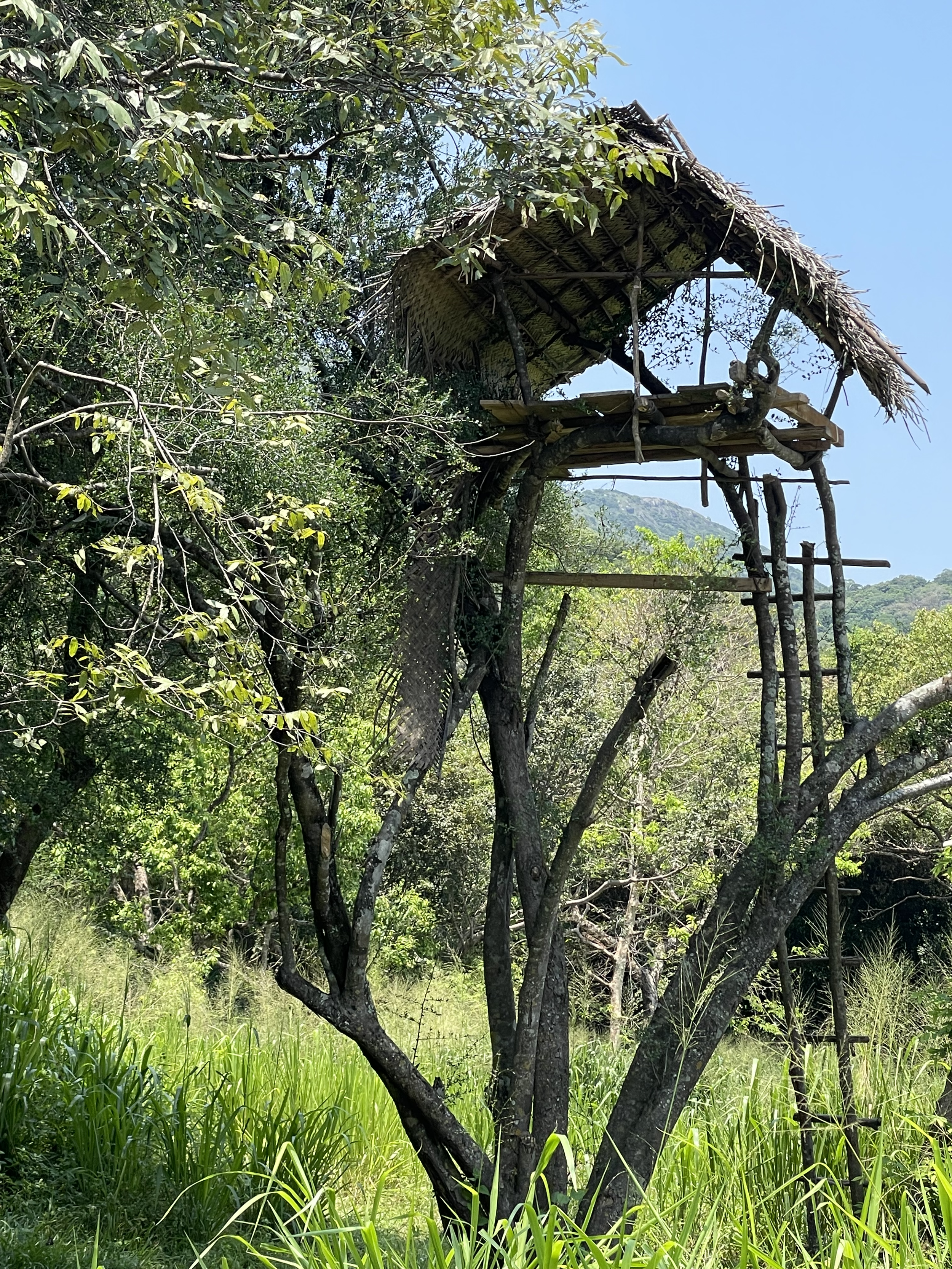
Goal 1: To promote community ownership of field research, our first objective is to institute a community science program that will equip farmers in north central Sri Lanka to collect data about patterns of elephant crop-foraging. Farmers will be trained to record the presence of elephants around farmlands, harnessing local knowledge to understand elephant behavior around agriculture. Further, these activities will foster an understanding among farmers about why research is needed, connecting real-time data to potential solutions to the conflict. Regular check-ins will ensure the quality of data collection, and results will be shared with government officials. We will measure farmer perceptions towards field research efforts with pre- and post-surveys.
Goal 2: Tourism may provide viable alternative livelihoods to agriculture in this region, but irresponsible tour practices can also lead to human–elephant conflict. Our research has shown some of the current practices related to tourism have negative impacts on elephants whose ranges encompass protected areas (national parks). The second objective is to conduct a training program for safari drivers around the parks where we conduct elephant research. In collaboration with local universities, the program will equip drivers with information to share with tourists and promote responsible operations. We will measure learning outcomes and assess the feasibility of developing tourism in this region to promote coexistence with elephants.
Goal 3: Our surveys of local communities indicate prevalent human–wildlife conflict, negatively impacting the perceived value of elephants. To develop grassroots-level conservation capacity, we will host workshops for urban and rural schoolchildren, teaching them about the roles of wildlife in environmental health. These workshops will include guided trips to nearby national parks, which would otherwise be inaccessible. We will utilize age-appropriate metrics to measure learning outcomes after the workshops (comparing urban to rural schools), with follow-up assessments to gauge long-term impact.
This project is supported by the International Elephant Foundation.
We are committed to ethical and sustainable research.
We recognize the importance of incorporating the input of local stakeholders in conservation-driven research. The field of conservation biology flourishes when diverse communities have seats at the table. We seek to ensure our work is not extractive from these communities. Instead, we design all research to uplift and empower these groups to make informed decisions about the future of elephants and other natural resources in Sri Lanka, and we have received third-party ethical clearance for all human subjects research. Click here to read our code of conduct that applies to all SLEP team members and associates.
Additionally, we have a strong responsibility to animal welfare in all of our work. Our research is non-invasive and follows guidelines for the ethical treatment of nonhuman animals in behavioral research published by the Association for the Study of Animal Behaviour and the Animal Behavior Society. Furthermore, our research is in collaboration with and permitted by the Department of Wildlife Conservation, and all methods are approved by the appropriate institutional ethics committees. These procedures ensure we have minimal impact on the wildlife and landscapes with which we work.